
Sustainability
-

- Sustainability
-
Innovation
Social
Basic approach and policy
The T.HASEGAWA Group is working to find unique flavors and fragrances by developing them and identifying new aroma components through technologies for creating fragrances, analyzing, synthesizing, and developing ingredients. The Group is also working to streamline and improve the efficiency of manufacturing methods in consideration of the environment and resource conservation. Responding to customer needs and potential demand while resolving social issues will help us develop new products and explore new business opportunities from the perspectives of meeting the needs of health-conscious consumers, contributing to food technology, enhancing quality of life and providing fulfilment, and delivering solutions for an aging society. Through flavors and fragrances, we aim to realize rich and healthy lifestyles and help create a sustainable society.

Relation with stakeholders
Customers
We provide the ideal flavors and fragrances for customer needs by providing high-quality and high-value-added products.
Examples of customer success cases
We integrate marketing data and sensory evaluation data to identify customer issues and make proposals that support product development. We have also developed a unique communication tool called Aroma Value Visualizer™, which visualizes the value of flavors and fragrances by combining physiological response measurements, such as salivary gland activity, with technologies, and Aroma Rainbow™, which expresses fragrances in color. We use these techniques and tools to share awareness of our customers’ apparent and latent issues, so that we can respond accurately to customer requests.
Natural environment
We are developing flavors and ingredients that enhance taste and help address shortages of food
resources whose supply has become unstable due to climate change and other factors. In synthetic
chemical studies, we aim to develop environmentally conscious ingredients by continuing to
reduce the amount of solvents used and replace toxic substances through improved manufacturing
processes while taking into account green chemistry. Specifically, we are using “The IFRA Green
Chemistry Compass,” published by the IFRA, to evaluate the conformity of our chemical processes
to green chemistry based on the 12 articles related to green chemistry. This clarifies issues to
be addressed and enables more efficient improvement activities. We contribute to reducing the
thickness of PET bottles and saving resources through the development of ingredients that
enhance the flavor of natural raw materials and other ingredients that supplement the sensation
of carbonation, which will lead to the protection of biodiversity and food resources. As part of
our own Circular Economy initiative, since 2023, we have been experimentally cultivating
lemongrass in Koumi-machi, Nagano Prefecture, using botanical residue compost from our
affiliated company, Koumi Compost.
In addition to reducing waste, we entered into a partnership agreement with Koumi-machi in 2025.
We maintain strong ties with local farmers and the municipal government, as we work together to
address local economic issues.
Joint research partners: universities and research institutes
Through knowledge sharing and opinion exchange, we strive to adopt cutting-edge research and improve our technology.
Governance and risk management
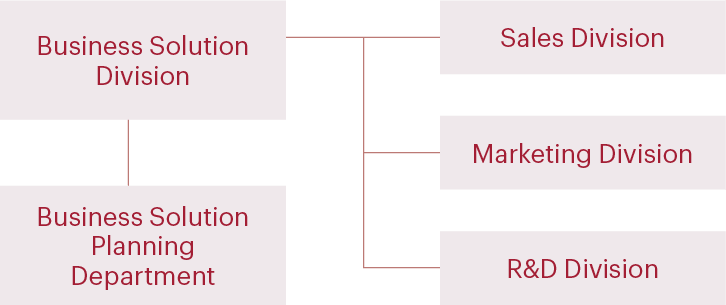
The Business Solution Division is strengthening collaboration between the Sales, Marketing and R&D Divisions. Under the strategy of the Business Solution Planning Department, we will systematically work to provide our customers with high-quality and high-value-added products while aiming to help solve social issues and achieve sustainable growth. In addition, the R&D Center serves as the backbone of our flavor, fragrance, and ingredient development. The Flavor R&D Center, the Fragrance R&D Center, and the Technology R&D Center pursue research in their respective specialized fields and collaborate with each other to combine their achievements, thereby strengthening our research and development capabilities.
(1)Fragrance Division
The domestic market for cosmetic fragrances is now in a mature stage, and
competition among domestic and overseas fragrance manufacturers is intensifying. In addition, we
are also facing rising raw material prices due to changes in the resource environment. Under
these circumstances, we have been working to continue improving our perfumery technology while
placing the highest priority on safety, quality, and environmental issues. Furthermore, we have
been conducting research and development in cooperation with sales and marketing. In FY2025,
utilizing our perfumery, analysis, and synthesis technologies, we continued to work on
developing highly refined fragrances with long-lasting and diffusive characteristics, accurately
identifying customer needs through preference and marketing surveys, ensuring the safety of our
fragrances, and complying with regulations of various countries—all in our efforts to deliver
safe, reliable products. As a result, many of our products have been adopted by customers both
domestically and internationally.
As we continue promoting globalization, we are also further strengthening our technical support
based on market research in overseas countries and regions while making every effort to acquire
new customers.
Our Chinese subsidiary, T.HASEGAWA FLAVOURS AND FRAGRANCES (SHANGHAI) CO., LTD., is
strengthening sensory evaluation and application research in addition to its Perfumery R&D
Division in order to respond to diversifying customer needs.
(2)Flavor Division
As consumer lifestyles and preferences continue to diversify, competition among
manufacturers and retailers has intensified, resulting in shorter product life cycles. The Group
conducts customer-oriented research and development to meet the increasingly diverse and
fast-changing needs of our customers. For example, in pursuit of greater authenticity, we have
developed flavors using alternatives to natural raw materials at risk of depletion, thereby
reducing their consumption. We have also developed new flavor ingredients created using various
extraction and processing technologies, and flavor systems that combine taste-enhancing
components such as richness boosters. We have actively presented these innovations to our
customers and responded to their needs through these tailored solutions.
As a result, in FY2025, our domestic and international customers once again adopted our products
for their major new products. Currently, aquaculture feeds made primarily from plant-based
ingredients are being developed as alternatives to fish meal. For these feeds, we are developing
flavors that maintain their palatability.
In addition, as we aim for globalization, we are developing flavors that meet the unique tastes
of each country and researching their applications to our customers’ products. While
strengthening technical support for our overseas subsidiaries and distributors in various
countries, we have steadily increased our customers’ adoption of our products.
The R&D Division of U.S. subsidiary T.HASEGAWA U.S.A., INC. has been expanding its research
on applications to customers’ products and has been successful in acquiring new customers.
Our Chinese subsidiary, T.HASEGAWA FLAVOURS AND FRAGRANCES (SHANGHAI) CO., LTD., is enhancing
its R&D capabilities and improving its operational efficiency by fully leveraging the
functions of the new research building completed in November 2023.
Our Malaysian subsidiary, T HASEGAWA FLAVOURS (KUALA LUMPUR) SDN. BHD., continues to strengthen
its R&D system to expand sales of compounded flavors across neighboring Asian countries, in
addition to ongoing efforts to enhance collaboration with applied research departments in
various countries.
(3)Basic R&D Division (common to Fragrance Division and Flavor Division)
①Research on synthetic flavors and fragrances
We have developed synthetic flavors and fragrances that characterize the
aroma of our products while also improving manufacturing methods to streamline the
manufacturing process of existing products and develop manufacturing methods for flavors and
fragrances that consider environmental conservation (sustainability). For one of the
synthetic flavors and fragrances that we are currently manufacturing, we switched from
petroleum-derived raw materials to sustainable alternatives derived from plants. We also
reviewed our manufacturing process and eliminated the use of petroleum-derived solvents.
Regarding the development of new synthetic flavors and fragrances, our internal safety
evaluation department assesses their safety and environmental impact to determine whether
the development should be continued.
②Research on natural products
We have developed an aroma analysis method using various aroma collection methods and the latest analytical equipment to improve the accuracy of trace aroma component analysis, thereby clarifying the composition of aroma components in many natural products and applying it to the development of flavor and fragrance products. In addition, we have been developing flavor materials using the extraction technology to utilize natural flavors as well as natural pigments, natural antioxidants, and other functional food materials as naturally derived materials. We are also developing fruit-based processed products that incorporate flavors designed with consideration for the final manufacturing process. Based on these technologies, we offer original solutions unique to the Company.
③Research on sensory evaluation, physiological response, and biotechnology
We have developed original evaluation methods using measurement technologies in sensory evaluation and physiological response (head blood flow, muscle potential, etc.) and utilized them in our proposal activities. In addition, we conduct basic R&D on microorganisms and enzymes, as well as the development of flavor-enhancing ingredients through the application of these R&D results.
④Other research related to flavor and fragrance development
We continued R&D on high-value-added flavor and fragrance products using emulsification, powdering, and other formulation technologies suitable for flavor and fragrance applications, as well as rationalization through process improvements in flavor and fragrance manufacturing. Furthermore, we developed new, safe food ingredients that meet the needs of the market.
Strategies
Increase in business opportunities
- Social challenges to which the Group can contribute with its technology
- Increasing interest and need for creating a sustainable society
- Possibilities of flavors and fragrances to create new value
Measures
- Sustaining R&D investments
- Proposing activities using marketing data and AI
- Speedy development: accurately identifying and rapidly responding to customer requests and latent needs
- Detailing responses to customers
- Responding to increased demand for alternative raw materials triggered by climate change
- Adopting advanced technologies and knowledge through active exchanges of views with universities and research institutes
We set KPI for maintaining and improving the ratio of R&D expenses to net sales and for continuing open innovation, and will promote the continuous development of new technologies in collaboration with universities, research institutes, and other organizations in order to strengthen our product development and proposal capabilities. In addition, we will further strengthen our organizational structure.
Development of an organizational structure
Collaboration between the Sales, Marketing and R&D Divisions to form the Business Solution Division has advanced, and the speed of responding to customers is accelerating. To achieve customer success, we have strengthened information sharing with reference to marketing data, technical materials, and research results, with the aim of further promoting solution sales. We continue to focus on research and development to increase sales.
T.HASEGAWA Group’s proprietary technologies
We introduce many of our proprietary technologies.
For more details, please see “Our Technologies”.
Product development and proposals
We offer proposals that integrate marketing data with sensory evaluation data. We also promote the active use of intellectual property, such as sensory evaluation data, to strengthen the linkage between compounding, analysis, and application and to develop new, unique products.
Development of an alternative to gum arabic
Gum arabic is a natural emulsifying agent derived from the bark of Acacia trees, commonly used in
foods worldwide for its high emulsifying properties. However, the social and political
instability in the major production regions of gum arabic has raised concerns about supply
reliability. In response, we have developed a sustainable alternative with emulsifying and
dispersion properties equivalent to gum arabic by combining widely used food-grade protein and
polysaccharide materials through the Maillard reaction.
The research results were presented at the 34th Annual Meeting of the Japan Soft Drink
Association, which took place in Hitotsubashi Hall, Tokyo, on November 21, 2025.
External collaboration
To strengthen product development and proposals, we are striving to adopt cutting-edge research and improve technology through knowledge sharing and opinion exchange, and we are continuously promoting joint research with universities and research institutes.
Development of an orange juice alternative
We have been working on the development of an orange juice alternative by applying our
emulsification technology for flavors, and have successfully created a proprietary ingredient (a
patent-pending emulsified flavor). This new material has been shown to enhance the juiciness and
mouthfeel of beverages, enabling product formulations that reduce the amount of orange juice
used without compromising its flavor. To verify the effectiveness of this ingredient, we
conducted not only sensory evaluations by expert panels but also analytical assessments using
precision instruments. The results confirming its juice substitution capabilities* were
presented at the 2025 meeting of the Japan Society for Bioscience, Biotechnology, and
Agrochemistry, which took place from March 4 to 8 at Sapporo Convention Center in Hokkaido.
Due to rising prices and supply uncertainties surrounding orange juice caused by social
conditions and climate change, our newly developed ingredient contributes to the stable supply
and price stabilization of products that use orange juice.
* Some of the verification experiments were conducted as part of a joint research project with Yokohama National University.
Contribution to society
Responding to health consciousness
Bringing delicious taste to low-sugar, low-salt, and low-fat foods
We develop ingredients that enhance sweetness, umami, and saltiness in response to the development of products that pursue a “healthy and good taste” for customers. Furthermore, we also propose ingredients that add delicious flavor to foods with reduced sugar and salt content. In addition, by developing products that impart a sense of fat and oil and a rich, full-bodied effect, we are proposing ingredients that add a sense of satisfaction to low-calorie, oil-free products.
Contributing to food technology
Solution for the lack of food resources
As part of the development of flavors to replace depleting food sources, we also
offer a flavor series that can replace savory natural raw materials and alternative compounded
flavors for citrus essential oils. To address the shortage of vanilla beans, we are developing
materials that can produce a vanilla taste even when the amount of vanilla beans is reduced by
applying compounded flavor and the heat reaction technology. In addition, we have developed a
compounded flavor based on aroma analysis. By combining that flavor with emulsified oils and
fats, we propose an ingredient that complements the flavor of milk even when the amount of dairy
ingredients used is reduced.
For plant-based foods, which effectively reduce the environmental impact, we have PLANTREACT™,
an ingredient that adds the flavors and tastes of animal products without actually using animal
ingredients and contributes to reproducing their distinctive flavors.
KOKUJUWA™, which is generated by using the power of enzymes in natural vegetable fats and oils,
contributes to reducing the use of oil and fat ingredients with supply concerns by imparting a
rich, full-bodied effect to foods. As serious concerns emerge that climate change could halve
the coffee-growing regions by 2050, we are currently developing new beverage flavors that
deliver the taste and satisfaction of coffee without using coffee beans, by leveraging the
flavor reproduction technology we have cultivated over time.
Enhancing quality of life and providing fulfilment
Bringing fragrance to living spaces and developing new technologies for skin care products
We are developing high-value-added and long-lasting fragrance materials that can
provide fragrance in situations where it is needed. We have also developed NANOLYS™, an
innovative solution for all sensitive skin in the world.
We presented our latest research results at the IFSCC Congress 2025 in Cannes.
For more information, please see NANOLYS™.
Development of a method to express the relationship between flavor and emotional concepts
In recent years, product development has increasingly emphasized emotional concepts such as moods, feelings, or imagined scenes (for example, a shampoo for moments of relaxation, or coffee to enjoy on a day off). Focusing on the emotional aspects of aroma, we explored the relationship between origin-specific flavor characteristics and emotional concepts, using single-origin coffee as a case study. We prepared coffee extracts using dark-roasted beans from four representative origins—Brazil, Ethiopia, Colombia, and Guatemala—and conducted (1) a detailed flavor evaluation by expert panels, and (2) an emotional evaluation by general consumer panels. Through the integrated analysis of (1) and (2), we confirmed that specific emotions and situations are associated with particular flavor characteristics (for example, coffee perceived as comforting by consumers tended to have a sweet aroma). In this way, by combining flavor evaluations by aroma experts (expert panels) with emotional evaluations by consumers (general panels), we established a method for visualizing the relationship between emotional concepts and aromas/flavors based on data.
Developing fragrances utilizing our proprietary massive sleep data
Japanese people are known to have one of the shortest average daily sleep durations, making it a
social challenge to ensure sufficient sleep. According to the Ministry of Health, Labour and
Welfare’s “Sleep Guide for Health Promotion 2023,” improving the restorative quality of sleep
contributes to extending healthy life expectancy.
With a mission to promote health through scent, we have launched research on the relationship
between scent and quality of sleep. Analysis of several thousand cases obtained from capsule
hotels indicated that sleeping in a space with the scent of certain essential oils affects
autonomic nervous system activity, non-REM sleep duration, the frequency of mid-sleep
awakenings, and breathing metrics.
These research results were presented at the 20th Spring Conference of the Japan Society of
Kansei Engineering (Venue: Kyoto Institute of Technology, Kyoto), which took place from March 5
to 7, 2025, and at the 49th Annual Meeting of the Japanese Society of Sleep Research from June
28 to 29, 2025 (Venue: Hiroshima University, Hiroshima Prefecture).
Based on these insights, we developed the Dream Harmony™ fragrance. Going forward, we will
continue our research on the relationship between sleep and scent and apply our findings to the
development of flavors and fragrances, thereby contributing to the well-being of many consumers
facing sleep problems.
Solution for an aging society
Improving quality of life in hospitals and nursing homes
As a solution to various unpleasant odors in our daily lives, we research and investigate such odors in detail and use the obtained data to develop fragrances that help reduce or eliminate them. In addition to developing masking materials for daily odors to improve the hospital and nursing care environment, we use near-infrared spectroscopy (NIRS) and develop Swallowing Map® as part of our efforts to facilitate eating and add good taste to nursing care food.
Indicators and targets
The Group uses indicators such as R&D expenses, number of patent applications, and number of
joint research projects with external organizations.
In FY2025, the percentage of R&D expense was 7.8% (consolidated basis), and we conducted 14
joint research projects.
For more details, please refer to the
T.HASEGAWA Group ESG Data Book (PDF).