Research and Development

- Research & Development
- Core Technologies
-
Analysis
This page is intended for residents of Japan
Core Technologies Analysis (Fragrance)
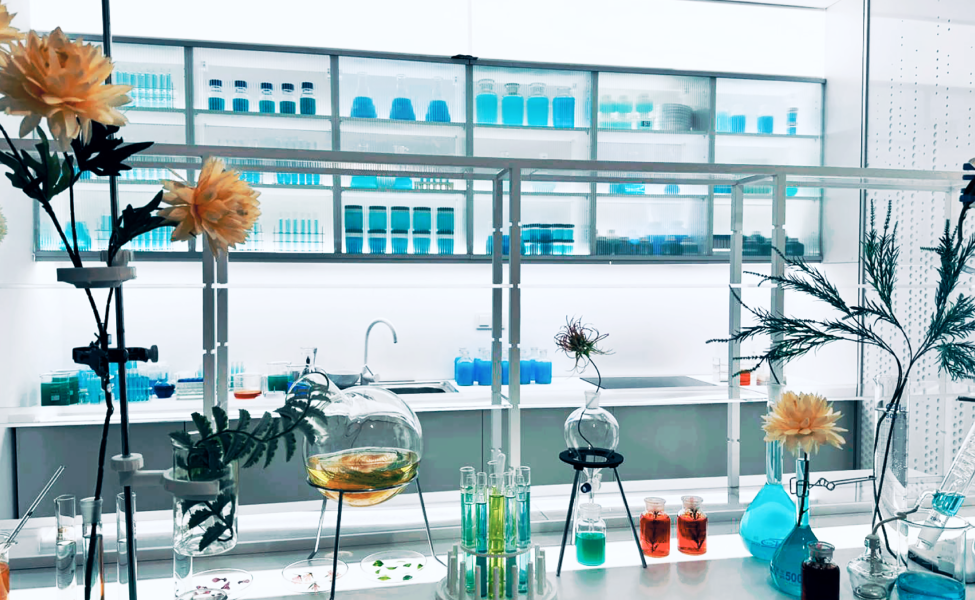
We utilize various analytical technologies to elucidate the characteristics of scent. While scents are invisible, their impression profoundly influences human emotions, memories, and the atmosphere. In order to create the scent that capture the essence, it is important to understand the components that make up that scent.
The scent of natural flowers and plants changes significantly depending on the season and the environment. ”Aquaspace™,” our proprietary aroma collection method, was developed based on the concept of floral scents being carried by moisture in the morning mist to reach greater distances. This technology can collect more natural and fresh scents without placing stress on flowers or fruits by introducing humidified air into the headspace. By using the optimal collection method from among various techniques, including the Aquaspace™ method, we collect odorous molecules of blooming flowers at their peak moment and analyze them with perception, thereby scientifically elucidating the freshness and depth of scent inherent in natural flowers. The data obtained is utilized as fundamental information for fragrance creation; furthermore, if unknown components are discovered, we determine their chemical structure and evaluate them as potential new fragrance compounds.
In daily life, there are diverse unpleasant odors originating from clothing, homes, and other sources. By analyzing these unpleasant odors and scientifically understanding their causes, we develop research aimed at enhancing comfort and improving the environment.
Since the diffusion characteristics of aroma components contained in the final fragrance product to be different from those of the aroma components themselves, the perception of the scent can change. Therefore, we also analyze the aroma components released from the final product added with fragrance components, utilizing these findings in our fragrance development process